Description
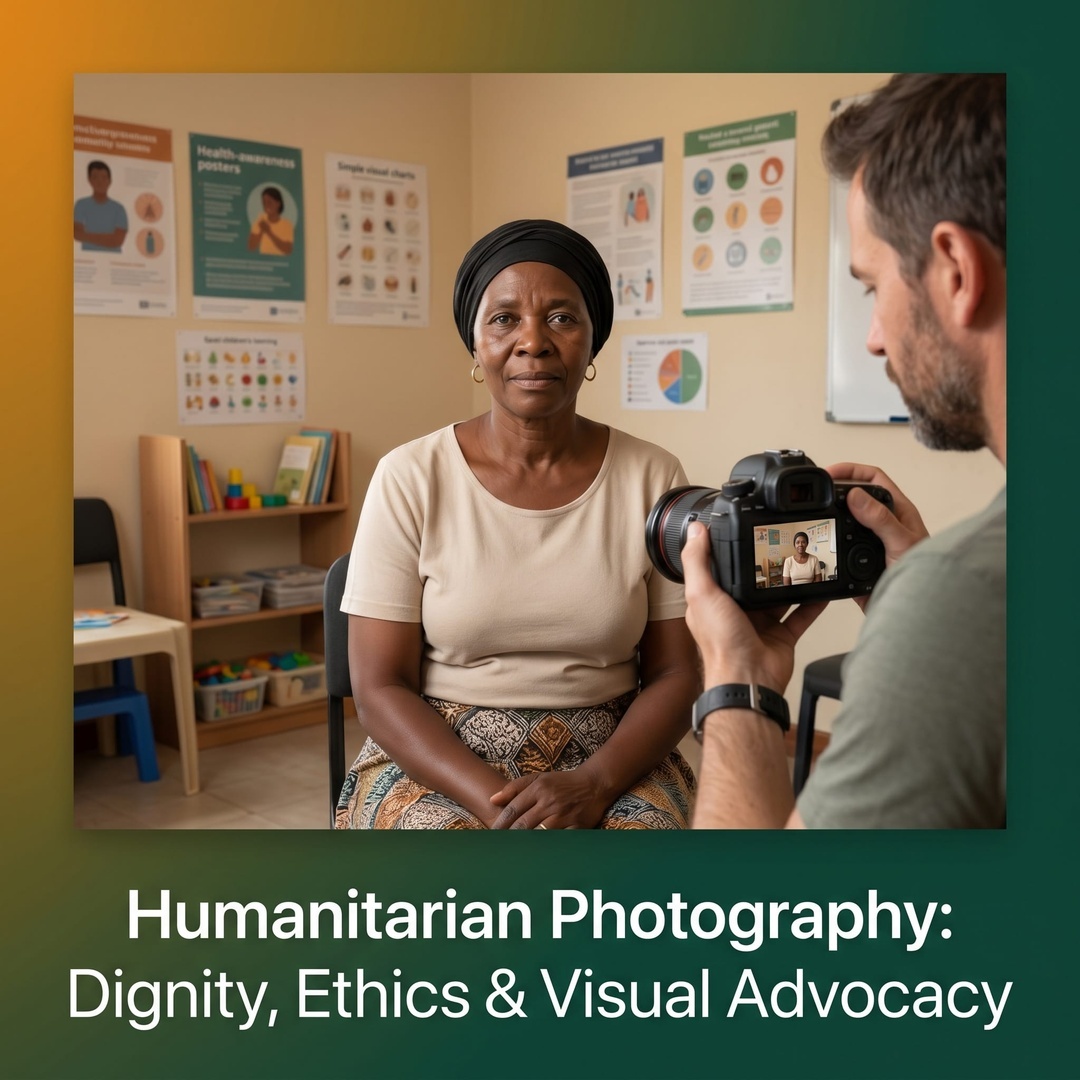
Humanitarian photography operates at the fragile boundary between witness and advocate, and this guide navigates that terrain with an ethics-first approach grounded in dignity-centred practice. The ethical framework section addresses informed consent in crisis contexts, the power dynamics between photographer and subject, strategies for avoiding victimising or stereotypical imagery, and protocols for photographing children, survivors of trauma, and displaced populations. Working with vulnerable communities is examined through case studies of participatory methods, building trust with local fixers and interpreters, managing expectations of subjects who may
expect direct aid, and exit strategies that leave communities with agency rather than exposure. The visual grammar of effective advocacy photography is broken down into compositional choices that evoke empathy without pity — including the use of environmental context, eye-line matching, detail shots versus wide establishing frames, and sequencing for narrative arcs that prioritise resilience over suffering. Finally, editorial and NGO pathways are mapped in detail: submission guidelines for UN agencies, the International Red Cross and Red Crescent Movement, Médecins Sans Frontières, and major humanitarian NGOs; ethical review processes for photo essays in publications such as Al Jazeera, The Guardian, and Reuters; and the emerging field of independent humanitarian photobooks. A downloadable appendix includes consent form templates, ethical checklists for field deployment, and a directory of humanitarian photo editors actively seeking contributors.