Description
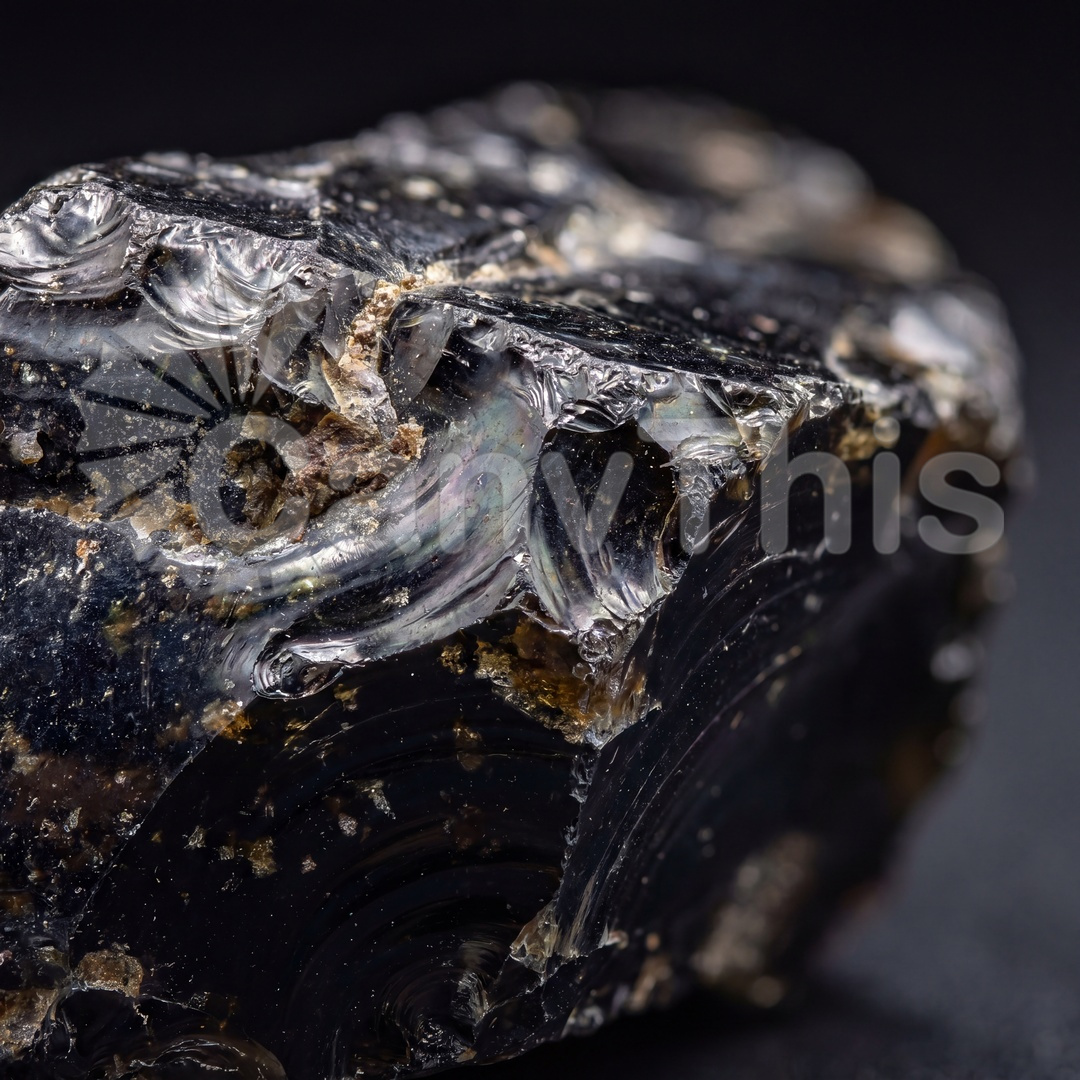
Obsidian — volcanic glass with an amorphous (non-crystalline) structure — fractures conchoidally: the fracture surface is a smooth curved form resembling the interior of a bivalve shell, without the flat planes that characterise crystalline mineral cleavage. This property produces extremely sharp edges — the fracture cuts at the molecular level, producing edges sharper than surgical steel that were exploited in Mesoamerican and Mediterranean prehistory for cutting tools and weapons. At 3:1 macro reproduction, the conchoidal fracture surface shows its full character: the smooth curved primary fracture face, the hackle marks radiating from the fracture initiation point, and the Wallner lines (ripple marks produced by the interaction of the fracture front with reflected stress waves). The obsidian’s natural deep black colour makes the fracture surface legible through its reflectivity — the curved surfaces creating complex light and dark patterns as different portions of the surface reflect the studio lighting.