Description
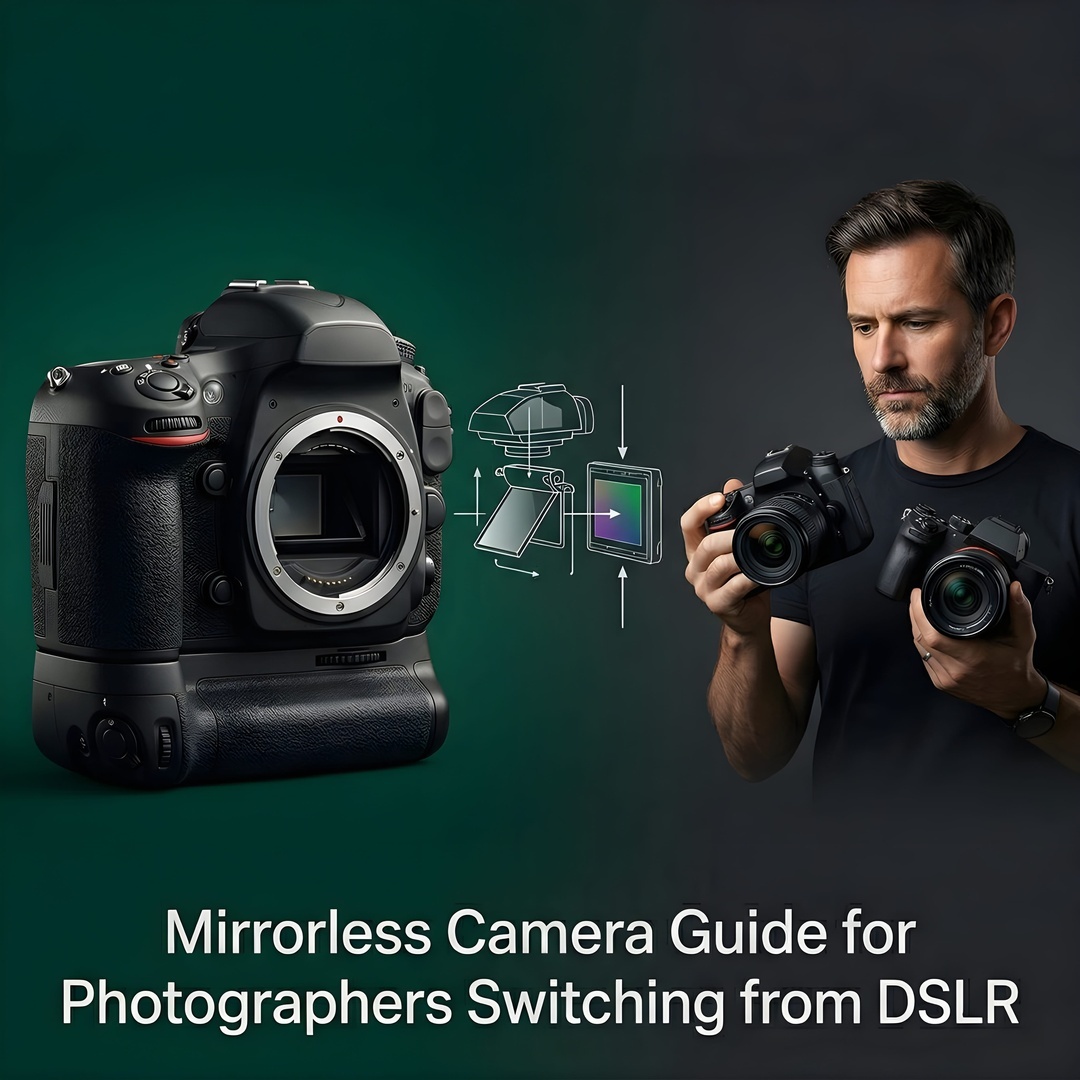
The transition from DSLR to mirrorless represents one of the most significant ergonomic and operational shifts in a photographer’s career, and the learning curve is steeper than camera manufacturers typically acknowledge. This guide provides an honest, practical transition framework developed from real-world user experience. EVF adaptation covers the psychological adjustment from optical through-the-lens viewing to electronic viewfinder display — the latency, blackout, and brightness simulation differences — and the specific EVF settings that most closely approximate the optical viewfinder experience for transitioning shooters. AF system differences between phase-detect mirrorless and DSLR phase-detect systems cover the subject recognition capabilities of computational AF, the expanded tracking across the full frame rather than the central point concentration of DSLR systems, and the specific settings configuration required to replicate familiar DSLR AF behaviour during the initial transition period. Battery management addresses the substantially reduced battery life of mirrorless compared to DSLR, multi-battery shooting discipline, and the charger and grip solutions for extended sessions. Lens adapter compatibility and the optical quality implications of adapted lenses versus native mirrorless lenses are evaluated for different photography applications.