Description
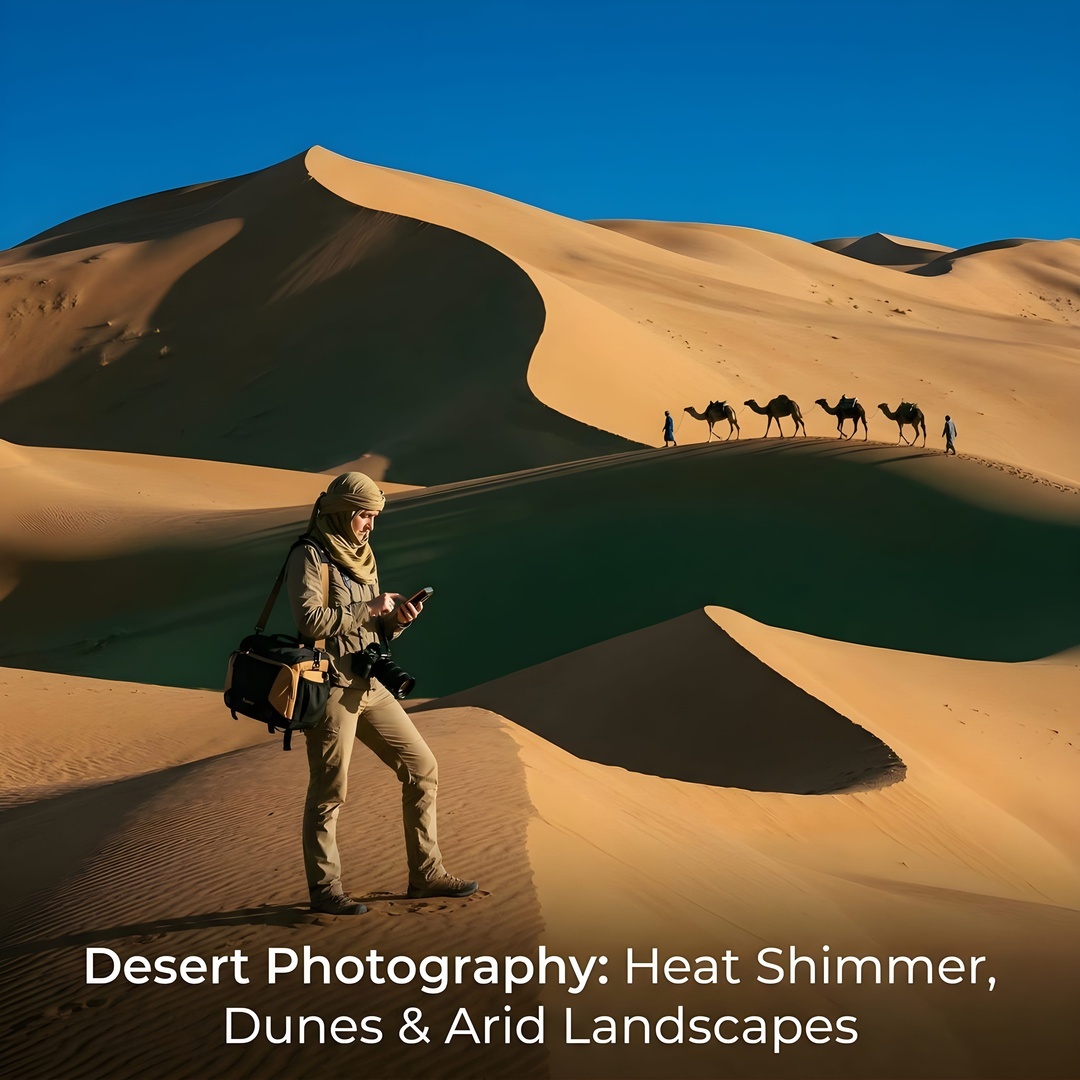
Desert photography operates in an environment of visual extremes — vast unbroken space, dramatic directional light, and the fundamental compositional challenge of a subject that is simultaneously monotone and endlessly varied in surface texture and form. This guide addresses the desert environment’s photographic demands with practical precision. Dune composition covers the S-curve’s natural occurrence in aeolian dune formations, the graphic simplicity of ridge-line shadow separation in low-angle light, and the placement of lone figures for scale reference in vast sandy environments. Desert light management addresses the compressed golden hour in low-latitude deserts, the technical merit of overcast desert conditions for colour saturation, and the heat haze phenomenon — technically called atmospheric refraction shimmer — as a creative element that can add distinctive visual texture to distant subjects. Equipment survival covers sensor cleaning requirements in dusty desert conditions, heat management for camera bodies in extreme temperatures, water and emergency supply requirements for remote desert locations, and the GPS navigation discipline required in featureless dune fields. Global destination analysis covers the Namib, Sahara, Rub’ al Khali, and Atacama for visual characteristics.