Description
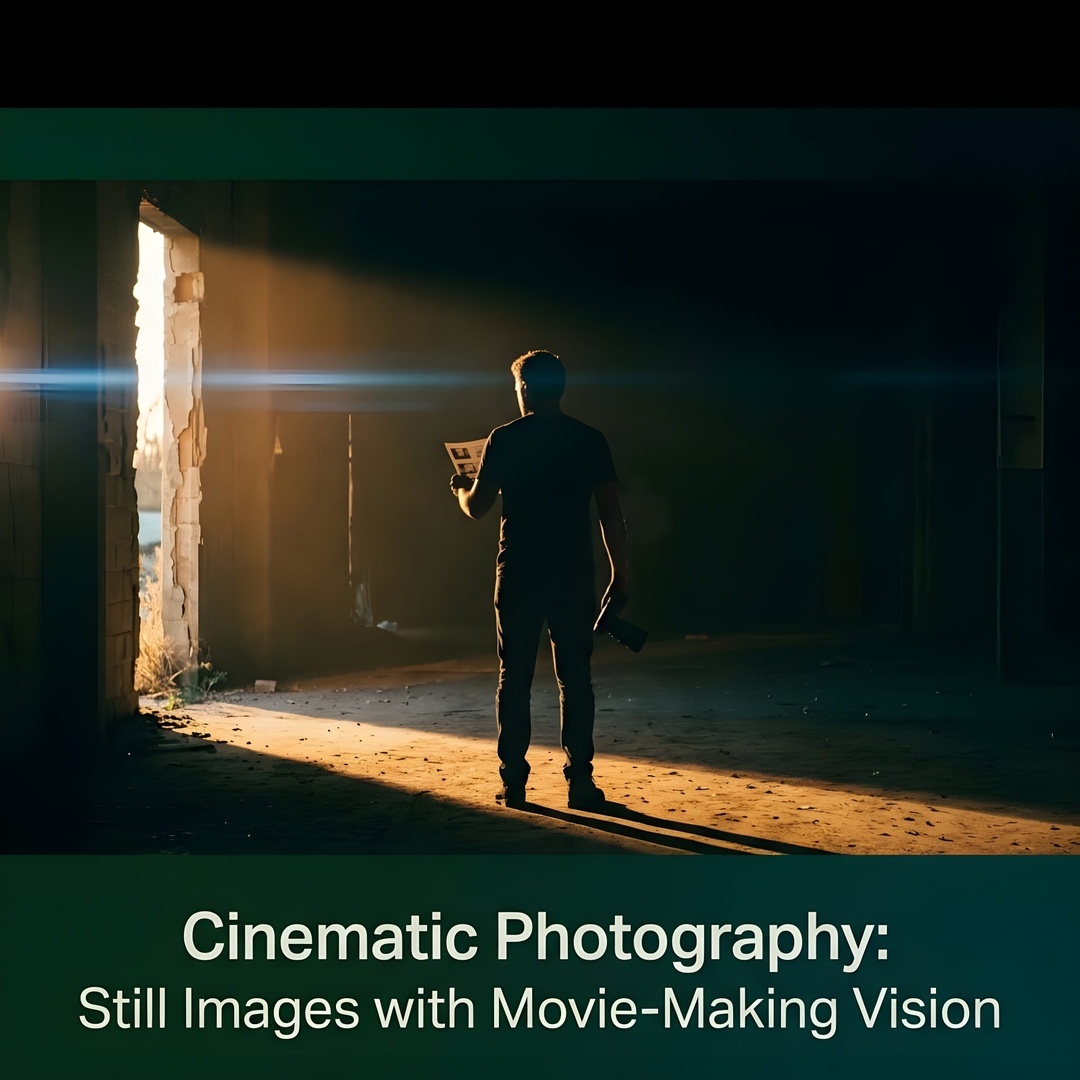
Cinematic photography applies the visual language and storytelling principles of film-making to the still image medium — creating photographs that feel like paused moments from films that never existed — and this guide develops the cross-disciplinary visual intelligence required to achieve that quality. Anamorphic lens technique for still photography covers the optical characteristics of anamorphic lenses — the oval bokeh, the horizontal lens flare, and the distinct aspect ratio distortion — and the anamorphic adapter systems that bring these qualities to standard mirrorless and DSLR systems without the cost of dedicated cinema lenses. Film-inspired colour grading covers the teal-and-orange colour grading approach that has become the cinematic aesthetic signature of the past decade — its origin in film laboratory colour timing, its digital implementation in Lightroom’s Colour Grading panel, and the more subtle and sophisticated film stock emulation approaches that transcend the ubiquitous orange-teal formula. The cinematic aspect ratio — 2.35:1 and 2.39:1 — as a compositional discipline is addressed both for final crop delivery and for the composition-at-capture approach that places the photographic subject in the correct third of the frame for the cinematic aspect ratio. Sequential narrative photography — the photo story as film story structure, with establishing shots, close-ups, reaction moments, and resolution images — applies cinematic storytelling to photographic series.