Description
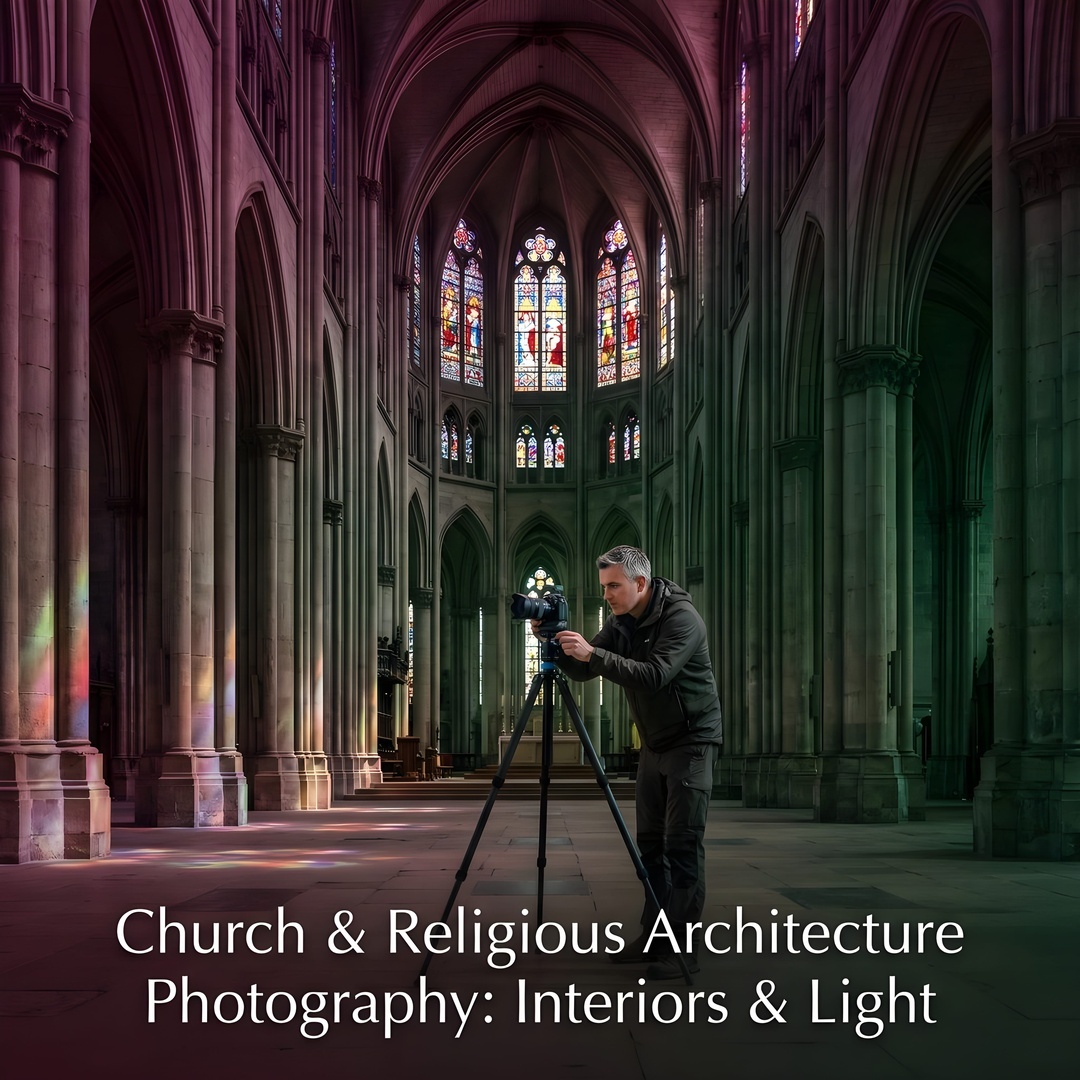
Religious architecture photography presents one of the most technically demanding interior photography challenges — extreme vertical scale, mixed artificial and natural light sources, potentially restrictive access conditions, and the logistical challenges of photographing spaces in which regular services and ceremonies occur. This guide provides a complete framework for managing these challenges with professional results. Interior natural and artificial light management covers the specific challenge of combining warm tungsten or LED artificial illumination with cool natural light from windows, the white balance compromise approach versus the colour-channel correction approach in post-processing, and the time-of-day selection for maximising natural light quality within interior spaces at different compass orientations. Wide-angle and tilt-shift technique addresses the compositional decisions for communicating vertical scale in cathedral interiors — the choice between including floor and ceiling simultaneously and the optical distortion that requires correction — and the tilt-shift lens alternative for perspective-correct vertical compositions. Stained glass exposure balance is addressed as a classic exposure challenge: the multi-exposure blending approach for maintaining stained glass colour while maintaining interior shadow detail. Photography protocol for active religious sites covers access request procedures and sensitivity guidance.