Description
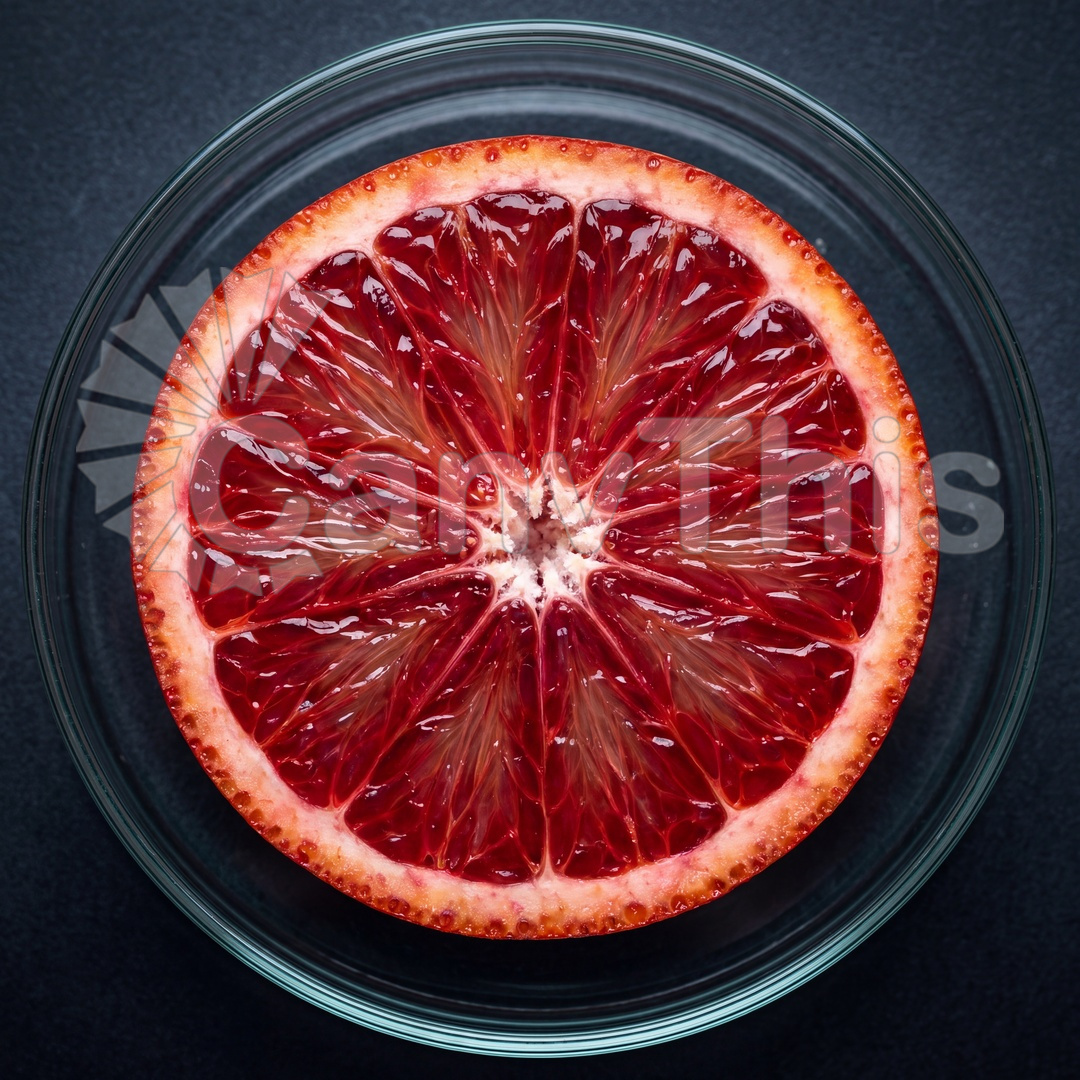
Blood orange’s characteristic red pigmentation is produced by anthocyanin flavonoids whose synthesis is triggered by cold temperatures during fruit development — the same chemical response that produces red autumn leaf colour. The anthocyanin is unevenly distributed within the orange: highest concentration in the juice vesicles of the inner segments, moderate in the membranes, and absent in the pith and rind flavedo. At 2:1 macro reproduction, the cross-section reveals this distribution as a vivid colour map: the deep ruby-red juice vesicles, the pale orange membrane between them, and the colourless white pith at the segment junctions. Shot with a transmitted backlight through the cross-section, the varying anthocyanin concentration modifies the light transmission — the deepest red sections are nearly opaque while the membrane regions transmit a warm amber. The vesicle microstructure visible through the membrane is also resolved in the transmitted light.